.jpg?1554909604 "Alexander Brodsky installation on the roof of the KDK bridge building. © Anka Gujabidze")
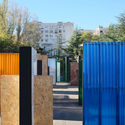
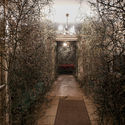
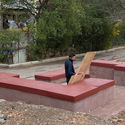

The first architecture Biennial since Georgia’s independence was held in Tbilisi in October 2018, with an ambitious and diverse programme of exhibitions, installations and events. The Biennial transformed a vast microdistrict into an architectural playground, highlighting the particularities of the existing urban fabric as much as the temporary installations.
Tbilisi has had a turbulent relationship with architecture since the collapse of the Soviet Union in 1991. Whether mobilized in the formation of eccentric icons such as the music theatre and exhibition Hall in Rike Park, or to represent ‘transparent’ institutions through dozens of glass-box police stations, architecture has been used largely as an expression of political egotism and as a tool for the assertion of power. Beyond these symbolic gestures, the urban fabric of the city is a combination of speculative development for hotels and luxury apartments, along with a saturated road infrastructure with a lack of public space and green areas.